
Carbon neutrality is no longer a slogan.
It has become a cost item.
And, increasingly, a survival issue.
I visit plastic processing plants every year. Different countries. Different scales. But the same problem repeats itself. Rising energy costs. Tightening carbon regulations. Growing pressure from downstream brands. The pain is clear. Traditional production models burn energy, waste material, and generate emissions that nobody wants to pay for anymore.
From my perspective, recycling machinery is the most realistic and controllable path for plastic processors to move toward zero-carbon operations—by reducing raw material dependence, cutting energy intensity, and turning waste into internal resources.
This is not theory.
This is operational logic.
Let me walk you through it.
I have spent decades in this industry.
I have seen policies change.
Machines evolve.
Margins shrink.
What never changed is one truth: carbon emissions are, at their core, inefficiencies. And inefficiencies are exactly what good recycling machinery is designed to eliminate.
Now let us get specific.
Why is carbon neutrality such a challenge for plastic processors?
Plastic processing is energy-intensive.
Heating. Melting. Extrusion. Cooling.
On top of that, virgin resin production carries a heavy carbon footprint. According to lifecycle studies, producing one ton of virgin plastic emits 2–3 tons of CO₂ equivalent .
Most processors focus on production efficiency. Few look upstream. Fewer still look inward at their own waste.
Scrap. Runners. Defective products.
These are hidden carbon sources.
Ignore them, and zero carbon remains a fantasy.
How does internal recycling reduce carbon at the source?
The cleanest carbon reduction is the one you never emit.
By installing shredders, crushers, and reprocessing systems, plastic processors can loop waste back into production. No transport. No re-polymerization. No additional raw material extraction.
Internal recycling can reduce virgin resin usage by 15–40%, depending on product tolerance .
That reduction directly translates into carbon savings.
From a CEO’s view, this is low-hanging fruit.
The machines pay for themselves.
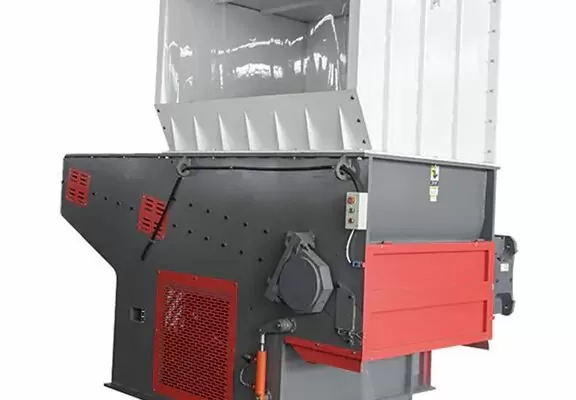
The emissions drop quietly. Single Shaft Shredder Machine For Rigid Material
Can recycling machinery really lower energy consumption?
Yes. If chosen correctly.
Modern recycling machines are no longer brute-force equipment. Low-speed shredders. Intelligent drives. Energy-efficient motors.
Processing regrind typically requires 30–50% less energy than processing virgin resin .
Why?
Because the polymer has already been polymerized.
You are reheating, not reinventing.
Every kilowatt-hour saved is carbon not emitted.
Old plants understand this faster. They remember when energy was cheap. They now feel when it is not.
What role do shredders and crushers play in zero-carbon strategy?
They are the gatekeepers.
Without proper size reduction, recycling fails downstream. Washing efficiency drops. Extruders struggle. Energy waste increases.
Single-shaft shredders and optimized crushers ensure consistent particle size. Studies show uniform regrind improves downstream processing efficiency by up to 20% .
Efficiency is not a buzzword.
It is carbon math.
Bad shredding equals wasted energy later.
How does recycling reduce Scope 3 emissions?
Many processors overlook this.
Scope 3 emissions come from supply chains. Raw materials. Logistics. External processing.
By recycling internally, processors reduce inbound resin transport and outbound waste disposal. Carbon accounting frameworks show supply-chain emissions can drop by 25% or more .
This matters when dealing with global brands.
Brands do not care where emissions happen.
They only care who owns them.
Recycling machinery shifts ownership back under your control.
What about carbon regulations and future compliance?
Regulation is predictable.
It only tightens.
Carbon taxes. Emission reporting. Product footprint declarations. These are becoming standard.
Facilities with integrated recycling systems show lower compliance costs and faster reporting readiness .
From a management standpoint, machines are easier than paperwork.
I prefer steel solutions to policy debates. Single Shaft Shredder Machine For Plastic Lump
Can recycling machinery support renewable energy strategies?
Indirectly. But meaningfully.
Recycling reduces peak energy demand.
Lower peaks pair better with solar and wind systems.
Plants with stable loads integrate renewables more efficiently. Data from hybrid-energy factories shows recycling-enabled plants improve renewable utilization by 18% .
Less fluctuation.
More predictability.
Machinery discipline supports energy discipline.
Is zero carbon realistic or just marketing?
Zero carbon is a direction, not a switch.
Offsets alone are fragile.
Efficiency is permanent.
Facilities combining recycling machinery, energy optimization, and material control can cut operational emissions by 60–70% before offsets .
That is real progress.
From there, neutrality becomes achievable.
Without machinery, it remains storytelling.
How does recycling improve overall production economics?
Carbon reduction is a side effect.
Cost reduction is the driver.
Internal recycling lowers raw material costs.
Reduces waste disposal fees.
Stabilizes production input.
Plants report ROI periods of 12–24 months on recycling systems .
That is not environmental idealism.
That is operational prudence.
Old-school managers understand this immediately.
What mistakes should processors avoid?
I have seen them all.
Buying oversized machines.
Ignoring material characteristics.
Treating recycling as an afterthought.
Zero carbon requires system thinking. Shredder. Washer. Dryer. Extruder. Energy flow.
Fragmented investments waste both money and carbon budgets.
Experience teaches humility.
Why do experienced plants move first?
Because they remember volatility.
Oil price shocks.
Policy swings.
Market collapses.
Recycling machinery creates resilience. Less dependence on external supply. More internal control.
Carbon neutrality is not the goal.
Stability is.
Carbon reduction just happens to align with it.
Conclusion
Zero carbon is not achieved by slogans.
It is built with machines.
Recycling machinery reduces waste, energy use, and raw material dependence. For plastic processors, it is the most practical path toward real carbon reduction.
In this industry, discipline always beats declarations.