
Plastic melting during shredding is a silent profit killer.
I have seen it too many times. Material sticks to the rotor. Screens clog. Output becomes unstable. Customers complain about regrind quality. Heat builds up. Efficiency drops. Margins shrink.
In high-speed shredding and crushing, friction is inevitable. But uncontrolled temperature is optional. The real question is not whether heat exists. It is whether we control it.
Yes. A well-designed rotor cooling system is the decisive factor in preventing plastic from melting during shredding. By stabilizing rotor temperature, reducing frictional heat accumulation, and maintaining consistent cutting geometry, we protect material integrity, improve throughput stability, and extend blade life. In my experience, cooling is not an accessory. It is a core productivity system.
Most people focus on motor power.
I focus on heat control.
Because power generates heat.
But discipline manages it.
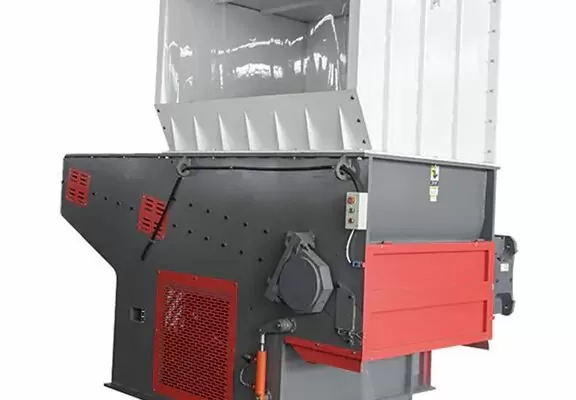
Why Does Plastic Melt During Shredding?
Let us start with fundamentals.
During shredding, the rotor spins at high speed.
Blades contact material repeatedly.
Friction converts mechanical energy into heat.
According to industry thermal studies, surface temperatures at cutting interfaces can exceed 120°C within minutes in poorly ventilated systems.
Many plastics soften far below that.
- PE softening point: ~80–100°C
- PP softening point: ~100–130°C
- ABS glass transition temperature: ~105°C
When rotor temperature climbs beyond safe thresholds, the material does not cut cleanly.
It smears.
It stretches.
It melts.
And melted plastic is the enemy of productivity.
What Causes Excessive Heat Build-Up?
Heat does not appear by accident. It accumulates due to design flaws.
From my years running Amige shredding lines, I have identified five primary causes:
- Excessive rotor speed
- Poor ventilation
- Dull blades
- High material feed density
- Inadequate rotor heat dissipation
High rotor RPM increases friction. According to processing benchmarks, a 15% increase in rotor speed can raise frictional heat by over 20%.
Many manufacturers chase higher RPM for throughput.
I prefer balanced engineering.
Because when plastic melts, real throughput decreases. Single Shaft Shredder Machine For Rigid Material
How Does a Rotor Cooling System Actually Work?
Cooling is not magic. It is physics.
There are three common rotor cooling approaches:
1. Air Cooling System
This uses forced airflow through rotor shafts.
Internal channels allow heat to dissipate.
Advantages:
- Lower cost
- Simple maintenance
- Suitable for moderate workloads
Limitation:
- Less effective in hot climates or continuous heavy loads
2. Water Cooling System
Water circulates through hollow rotor shafts.
Heat transfers to coolant.
This method significantly reduces thermal accumulation.
Data shows water cooling can reduce rotor temperature by 30–50%.
This is my preferred solution for high-output operations.
3. Hybrid Cooling
Air + water.
Used in large industrial lines.
Stable. Reliable. Overbuilt.
Just how I like machinery.
Why Is Rotor Cooling a Strategic Investment Rather Than a Cost?
Many buyers ask me:
“Is cooling really necessary?”
My answer is simple.
Calculate the hidden losses first.
Without cooling:
- Blade wear accelerates
- Material sticks to screen
- Cleaning downtime increases
- Output particle size becomes inconsistent
According to study, unscheduled cleaning due to material adhesion can reduce production efficiency by 18–25%.
Now compare that to the cost of installing a cooling system.
The math is obvious.
I build machines that run for years.
Not machines that look good in catalog photos.
Does Cooling Improve Material Quality?
Absolutely.
When plastic melts and re-solidifies during shredding, you get:
- Irregular flakes
- Thermal degradation
- Discoloration
- Reduced mechanical properties
In polymer processing, repeated thermal exposure reduces tensile strength. Studies indicate up to 12% performance loss after uncontrolled heat exposure.
Cooling keeps the process mechanical.
Not thermal.
The result:
- Cleaner cuts
- Uniform particle size
- Better downstream washing
- Improved extrusion stability
And stable regrind sells better.
That is market reality.
How Do I Design Rotor Cooling in My Machines?
I follow three principles.
1. Heat Anticipation
I calculate thermal load based on:
- Rotor diameter
- RPM
- Material density
- Expected duty cycle
Cooling capacity must exceed peak heat generation.
Not average.
2. Structural Integrity
Cooling channels must not weaken rotor strength.
A rotor is a rotating mass under stress.
Structural simulation is mandatory.
No shortcuts.
3. Service Accessibility
Cooling systems must be easy to maintain.
Accessible inlets.
Standard connectors.
Clear flow indicators.
Complex designs fail in real factories.
Simplicity wins.
Can Cooling Extend Blade Life?
Yes. And significantly.
Heat softens blade edges.
High temperature accelerates wear.
According to analysis, cutting tools operating above optimal temperature range experience up to 40% faster degradation.
Lower rotor temperature means:
- Sharper edges longer
- Less micro-chipping
- Reduced replacement frequency
Blades are consumables.
But wasteful consumption is poor management.
I design systems to protect consumables.
Because long-term cost matters more than initial purchase price.
When Is Rotor Cooling Absolutely Necessary?
In my operational experience, cooling becomes mandatory in:
- High-speed single shaft shredders
- Thick-walled plastic processing
- Film and soft plastic lines
- Continuous 24/7 operation
- Hot climate environments
Especially in regions where ambient temperature exceeds 30°C.
Heat accumulates faster than people expect.
A machine that runs well in spring may fail in summer.
Cooling provides stability across seasons.
That is operational wisdom.
Conclusion
Rotor cooling is not a luxury. It is operational discipline. It protects material quality, extends blade life, and stabilizes throughput. In plastic shredding, heat control equals profit control. I design cooling not as an option, but as a strategic foundation for reliable recycling performance.