
Europe keeps tightening environmental standards.
Recycling targets keep climbing.
And many factories feel the pressure — more rules, higher compliance costs, and tougher audits.
I’ve seen clients panic because their waste-handling lines can’t keep up.
The pain is real.
The urgency is real.
And without proper plastic shredding equipment, recycling goals quickly become impossible.
Plastic shredding equipment is becoming the backbone of Europe’s recycling transformation.
It improves sorting efficiency, reduces waste volume, stabilizes processing quality, and supports the entire circular-economy push.
In short, Europe’s environmental upgrades depend heavily on better upstream size-reduction systems — including high-torque shredders, heavy-duty crushers, and integrated recycling lines.
When Europe pushes for environmental reform, equipment manufacturers like me feel the shockwave first.
And trust me, it’s a good wake-up call.
I’ll break the trend down in a practical way — how new policies shape demand, how shredding machines fit into the ecosystem, and why my team at Amige spent years optimizing torque, blade design, and stability.
How is Europe shifting its environmental policies?
Europe is upgrading policies at a remarkable pace.
The EU Green Deal and Circular Economy Action Plan set strict recycling obligations.
Member states must boost plastic recovery rates, and non-compliant factories face penalties.
According to data from EU Waste Statistics, plastic recycling targets are increasing across all categories.
Producers, packaging companies, and recyclers must adapt — fast.
This creates a demand surge for high-efficiency shredding equipment that can handle mixed waste, contaminated plastic, film, rigid plastics, and composite materials.
Why is plastic shredding equipment so critical?
When people talk about recycling, they imagine washing lines or pelletizing.
But the truth is simple: without stable size-reduction, nothing else works.
Shredders reduce bulk.
They standardize particle size.
They make sorting easier.
And they stabilize throughput for washing and extrusion.
A report from European Recycling Technology Board shows that over 70% of recycling inefficiencies come from poor upstream size-reduction.
This confirms what I’ve witnessed on factory floors for years. Single Shaft Shredder Machine For LDPE Film
What types of shredders are trending in Europe?
Europe loves engineering, so naturally the region prefers high-spec machines.
Three categories dominate the trend.
1. Single-shaft shredders
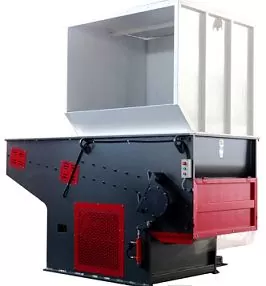
These are the workhorses for post-consumer rigid plastics, pallets, drums, pipes.
High torque, steady feeding, minimal noise. Plastic Shredder With Plastic Crusher For Plastic Lumps Recycling
2. Dual-shaft shredders
Best for bulky waste and mixed materials.
Ideal for MRF facilities and municipal recycling. Double Shaft Shredder 800mm With Feeding and Discharging Conveyor Belt For Blue Drum Recycling
3. Four-shaft shredders
European plants use these when they need aggressive cutting and smaller output sizes.
Expensive but powerful.
According to EuroTech Machinery Insight, demand for multi-shaft shredders increased 15% this year.
How does shredding support total recycling efficiency?
I always tell customers:
“If the shredder performs well, your whole line performs well.”
Here’s why:
- Less jamming in washing tanks
- Higher friction-washing efficiency
- Better drying performance
- More stable extrusion feeding
- Lower energy consumption during pelletizing
Based on Recycling Economics Lab data, plants that upgrade shredding systems see a 20–30% improvement in total capacity. Single Shaft Shredder 1200mm for PET Film Shredding
That is… significant.
Why is Europe choosing heavy-duty shredders instead of traditional crushers?
Europe handles complex waste streams — multilayer films, contaminated waste, hard plastics, mixed residues.
Traditional crushers choke on these materials.
Shredders don’t.
Shredders offer:
- Stronger torque
- Slower RPM for safety
- Larger chambers
- Ability to handle irregular materials
- More stable particle sizes
In northern Europe especially, waste contractors now demand energy-efficient shredders with servo-drives and automatic overload protection.
This trend aligns perfectly with our engineering philosophy at Amige: durability first, practicality always.
What innovations are shaping the next generation of shredding machines?
Europe pushes us to innovate faster than any other market.
Here are the most impactful trends:
1. High-torque, low-speed motors
Lower noise, higher cutting force.
Preferred due to strict EU workplace regulations.
2. Intelligent blade monitoring
Sensors measure wear and temperature.
This reduces downtime and maintains output quality.
3. Energy-saving drive systems
Europe insists on energy efficiency.
We’ve already integrated VFDs and optimized reductions to meet these requirements.
4. Modular shredding systems
Plants want flexibility.
Quick-change screens, interchangeable shafts — these are becoming mainstream.
A report from GreenTech European Machinery Review shows modular shredders cut maintenance downtime by 22%.
How are European recyclers selecting equipment suppliers?
Europeans buy machines differently.
They value long-term stability, certifications, and service networks.
Cost is not the first question — reliability is.
Buyers typically evaluate:
- CE compliance
- Energy-consumption curves
- Blade material spec sheets
- Noise levels
- Maintenance accessibility
- After-sales capability
- Real-line performance data
Our partners in Italy and Germany often request multi-stage trials before finalizing.
A typical EU buyer demands more documents than an entire Asian supply chain.
But I respect that. Single Shaft Shredder 1200mm For Blowing Mould Waste Recycling
Good machinery should withstand scrutiny.
Why do I believe shredders will dominate Europe’s recycling upgrades?
Because the policies demand it.
The market demands it.
And the waste streams demand it.
Europe is moving toward:
- Higher recycling quotas
- Export restrictions on low-quality scrap
- Mandatory recyclate content
- Digital product passports
- Producer responsibility enforcement
To meet these standards, plants need stable upstream processing.
And that begins with shredding.
In simple terms:
No shredding, no recycling.
Conclusion
Europe’s environmental reforms rely heavily on advanced plastic shredding equipment.
Without strong front-end size-reduction, recycling capacity cannot expand.
And as markets shift, shredders will remain the core engine powering Europe’s circular economy.