
For many plastic processors in Europe, the pressure is no longer coming from competitors.
It is coming from Brussels.
New regulations demand higher recycled plastic content.
Deadlines are fixed.
Penalties are real.
Plants that relied on virgin material are suddenly exposed.
I have spoken with enough European partners to know the pain is operational, not political.
And when policy hits operations, machines move first.
The short answer is straightforward.
Mandatory recycled plastic ratios force manufacturers to secure stable, controllable recycled feedstock, and shredders are the first gatekeeper of that supply.
Without reliable shredding, compliance is theoretical.
With it, compliance becomes industrial.
If you think this is only about legislation, you are missing the machinery story underneath.
What Exactly Does the EU Mean by “Mandatory Recycled Content”?
The EU Packaging and Packaging Waste Regulation (PPWR) has shifted the tone.
Targets are no longer voluntary.
They are enforceable.
For selected packaging categories, recycled plastic content requirements will rise step by step toward 2030 and beyond.
Some applications face thresholds above 30% PCR usage.
According to draft impact assessments, over 12 million tons of additional recycled plastic demand will be created across the EU market .
Demand without supply is a problem.
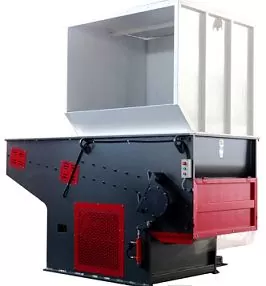
Supply without processing is fantasy. Single Shaft Shredder Machine For Waste Cardboard
Why Does Regulation Immediately Affect Shredders First?
Because recycling starts ugly.
Not clean.
Not pelletized.
Post-consumer waste arrives mixed.
Contaminated.
Inconsistent.
Before washing.
Before extrusion.
Before granulation.
Everything must be size-reduced.
Shredders sit at the front line.
No shredder, no downstream stability.
Industry conversion data shows that every additional 1 million tons of recycled plastic capacity requires roughly 280–350 industrial shredders globally .
That number surprises people.
It never surprises machine builders.
Is This Regulation-Driven Demand or Market-Driven Demand?
It is both.
But regulation lights the fire.
Brand owners commit publicly.
Converters panic privately.
Recyclers expand aggressively.
Suddenly, stable feedstock matters more than cheap feedstock.
Market surveys suggest that over 60% of EU plastic processors plan capital investment specifically linked to recycled-content compliance .
That capital goes somewhere.
Usually into steel. Single Shaft Shredder 1200mm for LDPE film recycling
What Types of Shredders Benefit Most From This Shift?
Not all shredders win equally.
Single-shaft shredders dominate post-consumer streams.
Film.
Bottles.
Injection rejects.
Dual-shaft shredders benefit from bulky packaging waste and mixed industrial scrap.
The regulation favors volume.
Volume favors robustness.
Equipment demand forecasts show single-shaft shredders growing at over 7% CAGR in the EU recycling segment alone .
I respect trends.
But I trust installed base more.
How Does Recycled Content Enforcement Change Shredder Design Priorities?
Ten years ago, output was king.
Now, consistency rules.
Recycled content ratios mean traceability.
Traceability means predictable particle size.
Predictable particle size starts with controlled shredding.
Blade geometry matters more.
Screen configuration matters more.
Energy stability matters more.
Operational audits show that inconsistent shredding increases downstream reject rates by up to 18% .
That loss shows up during certification.
Auditors are not sentimental.Single Shaft Shredder Machine For LDPE Film
Are Small and Medium Recyclers Also Affected?
Especially them.
Large groups can absorb compliance costs.
SMEs cannot.
To survive, smaller recyclers must improve yield.
Not just scale.
That pushes demand toward efficient, flexible shredders with fast blade change and adaptable screens.
EU SME recycling support reports indicate that equipment efficiency upgrades are the top-funded category under sustainability grants .
Policy money rarely buys theory.
It buys machines.
What Role Does Contamination Play in Shredder Demand?
A large one.
Often ignored.
Higher recycled content means accepting lower-quality waste.
More labels.
More metal.
More surprises.
Shredders must survive contamination without catastrophic failure.
Data from MRF operations shows contamination-related downtime can be reduced by 25% with reinforced shredder chamber designs .
Design discipline becomes policy insurance.
Does Energy Efficiency Matter Under These Regulations?
More than ever.
EU sustainability audits evaluate carbon footprint per ton of recycled plastic.
Energy-hungry shredding hurts compliance narratives.
Optimized shredding systems can reduce energy consumption by 15–20% compared to legacy designs .
This is where old experience helps.
Smooth cutting beats brute force.
My engineers argue with me.
Physics usually sides with me. Single Shaft Shredder 1200mm for PET Film Shredding
How Are Brand Owners Indirectly Driving Shredder Sales?
Quietly.
Effectively.
Brands impose recycled-content requirements upstream.
Converters push recyclers.
Recyclers call us.
It is a cascade.
Brand compliance frameworks show over 70% of major EU FMCG companies now require PCR documentation from suppliers .
Paperwork creates steel demand.
That irony is not lost on me.
Will This Demand Last or Fade?
Regulations rarely fade.
They accumulate.
Once recycled content becomes standard, capacity cannot roll back.
Machines stay.
Maintenance stays.
Upgrades follow.
Long-term outlook models suggest sustained recycling equipment demand through at least 2035 under current EU policy trajectories .
I have learned one thing in this business.
Regulation creates habits.
Habits create markets.
What Should Buyers Watch Out For Right Now?
Do not buy in panic.
But do not wait for clarity either.
Choose shredders designed for variability.
Material variability.
Regulatory variability.
Ask about blade life under contaminated feedstock.
Ask about energy curves, not just motor size.
Tradition matters here.
The fundamentals have not changed.
Only the pressure has.
Conclusion
Mandatory recycled plastic content is not a slogan.
It is an operational requirement.
Shredders sit at the beginning of compliance.
Those who invest early gain stability.
Those who delay pay twice.