
Along the coast of Kenya, the ocean provides livelihoods for thousands of fishermen and supports important marine ecosystems. However, another challenge has been growing quietly beneath the waves and along the shoreline: abandoned and discarded fishing nets. These old fishing nets, often called “ghost nets,” can continue trapping marine animals, damage coastal environments, and create difficult waste management problems. During my conversations with recycling companies and environmental organizations, I realized that fishing net recycling is not only a waste treatment issue. It is also a social responsibility and a key part of the global circular economy.
At AMIGE, we believe that advanced shredding and recycling technology can help transform abandoned fishing nets from environmental waste into valuable recycled materials. Through efficient shredding, washing, and processing solutions, old fishing nets can be converted into reusable plastic flakes or pellets for new products. By supporting Kenya’s coastal cleanup efforts, we aim to contribute practical recycling solutions that connect environmental protection with economic development.
A fishing net may look like waste.
But inside every net is valuable plastic.
The challenge is unlocking that value efficiently.
Why Are Discarded Fishing Nets Becoming a Global Environmental Challenge?
Fishing nets are mainly made from durable plastics such as:
- Nylon (PA)
- Polypropylene (PP)
- Polyethylene (PE)
These materials are designed to survive harsh marine environments.
That durability is useful during fishing.
But it becomes a problem after disposal.
Old nets can remain in oceans and coastal areas for many years.
They may cause:
- Marine animal entanglement
- Coastal pollution
- Navigation hazards
- Microplastic generation
According to the Global Marine Plastic Research Report, abandoned fishing equipment represents one of the most challenging forms of marine plastic pollution.
The solution is not simply collecting nets.
The solution is creating a recycling pathway.
Why Is Kenya Becoming an Important Fishing Net Recycling Location?
Kenya has a long coastline along the Indian Ocean.
Coastal communities depend heavily on fishing activities.
Major fishing areas include:
- Mombasa
- Lamu
- Kilifi
- Malindi
- Kwale
As fishing activities develop, the amount of used fishing equipment also increases.
Local organizations and recycling companies are beginning to explore solutions for collecting and processing old fishing nets.
The African Coastal Sustainability Initiative highlights marine waste recovery as an important direction for sustainable coastal development.
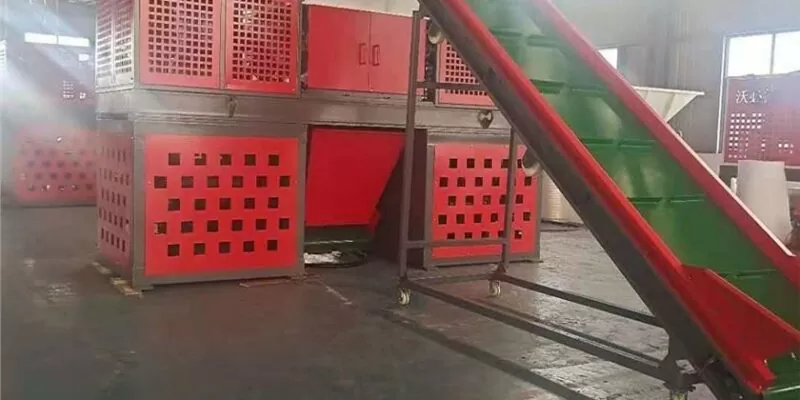
Waste management and economic opportunity can work together. Double Single Shaft Shredder For Waste Clothes
Why Is Recycling Fishing Nets Technically Challenging?
Fishing nets are different from ordinary plastic waste.
They create several processing challenges.
Including:
Long Fibers
Nets easily wrap around rotating equipment.
High Strength
Nylon and PP fibers require strong cutting forces.
Contamination
Used nets may contain:
- Sand
- Salt
- Organic materials
- Shell residues
- Fishing equipment parts
Mixed Materials
Different nets may contain different polymers.
This requires proper sorting and processing.
At AMIGE, we always emphasize one principle:
The right machine starts with understanding the material.
How Does Shredding Technology Solve Fishing Net Recycling Problems?
The first important step is size reduction.
A professional industrial shredder can transform large fishing nets into manageable pieces.
Benefits include:
- Easier transportation
- Better washing efficiency
- Improved sorting
- Stable downstream processing
For fishing nets, we typically recommend:
- Single shaft shredders
- Double shaft shredders
- Customized cutting systems
The goal is not simply cutting.
The goal is preparing material for recycling.
What Type of Shredder Is Suitable for Fishing Nets?
Different applications require different solutions.
Double Shaft Shredder
Suitable for:
- Large fishing nets
- Mixed marine waste
- Heavy contaminated materials
Advantages:
- High torque
- Strong pulling force
- Excellent resistance to difficult materials
Single Shaft Shredder
Suitable for:
- Pre-cut fishing nets
- Cleaner plastic fibers
- Controlled particle size requirements
Advantages:
- Adjustable output size
- Stable processing
- Efficient operation
Choosing the correct shredder improves productivity and reduces maintenance costs.
How Does Washing Improve Recycled Fishing Net Quality?
After shredding, fishing nets require effective cleaning.
The washing process removes:
- Salt
- Sand
- Dirt
- Organic residues
- Oil contamination
A typical process includes:
- Crushing or shredding
- Friction washing
- Floating separation
- Dewatering
- Drying
Clean material creates higher recycling value.
The Plastic Recycling Technology Association identifies washing quality as a major factor affecting recycled plastic applications.
What Products Can Be Made From Recycled Fishing Nets?
Recycled fishing nets can become valuable raw materials.
Potential applications include:
- Recycled plastic pellets
- Injection molding products
- Plastic boards
- Industrial components
- New fishing equipment
The circular economy creates a second life for materials.
A fishing net can return to the market instead of returning to the ocean.
How Does Fishing Net Recycling Support Carbon Reduction?
Producing recycled plastic generally requires fewer resources than producing virgin plastic.
Recycling helps reduce:
- Fossil fuel consumption
- Plastic waste
- Landfill pressure
- Carbon emissions
According to the Circular Plastic Economy Research Center, increasing plastic recovery rates is an important strategy for reducing lifecycle emissions.
Every recycled kilogram matters.
How Can Technology Support African Recycling Development?
Many African countries have valuable recycling resources but require suitable technology solutions.
Successful recycling projects need:
- Reliable equipment
- Simple maintenance
- Operator training
- Local technical support
- Stable spare parts supply
At AMIGE, we understand that equipment must match local conditions.
A machine designed for Europe may not always be the best solution elsewhere.
Engineering must respect reality.
What Challenges Must Fishing Net Recycling Projects Overcome?
There are several challenges.
Collection
Old nets must first be gathered from fishing communities.
Transportation
Coastal areas may have limited logistics infrastructure.
Sorting
Different materials require separation.
Investment
Recycling projects require long-term planning.
However, every successful project begins with one important step:
Taking action.
How Is AMIGE Supporting Sustainable Plastic Recycling?
At AMIGE, our role is to provide reliable recycling technology.
Our solutions include:
- Heavy-duty shredders
- Plastic crushers
- Washing systems
- Dewatering equipment
- Pelletizing solutions
We work with customers to design systems based on:
- Material type
- Processing capacity
- Final product requirements
- Local operating conditions
Our mission is simple:
Help customers turn plastic waste into valuable resources.
What Does the Future Hold for Fishing Net Recycling?
The future of marine plastic recycling will depend on cooperation.
Governments.
Fishing communities.
Recycling companies.
Technology suppliers.
Together, we can create more effective recovery systems.
I believe abandoned fishing nets should not represent the end of a material’s journey.
They should represent the beginning of a new one.
Conclusion
Fishing net recycling in Kenya represents a meaningful step toward protecting coastal environments and building a circular economy. Through advanced shredding, washing, and recycling technology, abandoned nets can be transformed into valuable resources. At AMIGE, we are proud to support global recycling efforts by providing practical solutions that help communities reduce waste and create sustainable opportunities.
#FishingNetRecycling
#MarinePlasticRecycling
#PlasticShredder
#PlasticRecycling
#CircularEconomy
#OceanCleanup
#WasteRecycling
#RecyclingEquipment
#SustainableTechnology
#AMIGE