
The plastic recycling industry is entering a new stage of transformation. For many years, recycling companies focused mainly on increasing processing capacity and purchasing larger equipment. However, by 2026, the competitive landscape is changing. Rising labor costs, stricter environmental requirements, higher energy prices, and increasing demand for recycled materials are forcing companies to rethink their production models. At AMIGE, I have communicated with recycling companies across Europe, Asia, the Middle East, and the Americas. One conclusion is becoming increasingly clear: automation and intelligent technology are no longer optional upgrades. They are becoming the foundation of future recycling plants.
In 2026, intelligent plastic recycling systems will help companies improve production efficiency, reduce operating costs, increase material recovery rates, and achieve more stable quality control. Technologies such as automated feeding, AI-assisted monitoring, intelligent PLC control, remote diagnosis, and data-based production management will transform traditional recycling factories into smart manufacturing facilities. At AMIGE, we believe the future belongs to recycling companies that combine advanced machinery with intelligent management.
The recycling factory of the future will not only process waste.
It will think.
It will analyze.
It will optimize.
Why Is Plastic Recycling Entering a New Technology Era?
The traditional recycling model relied heavily on manual operation.
Workers inspected materials.
Operators adjusted machines.
Technicians responded after failures happened.
This model worked in the past.
But today’s market requires more.
Modern recycling companies face:
- Higher labor costs
- More complex waste streams
- Higher production targets
- Strict quality requirements
- Increasing customer expectations
According to the Global Plastic Recycling Technology Outlook, automation adoption is becoming one of the most important investment directions for recycling companies worldwide.
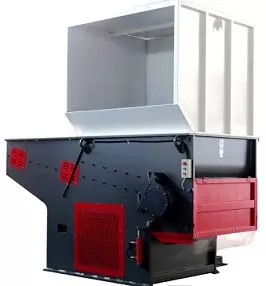
Efficiency is becoming the key competitive advantage. Single Shaft Shredder Machine For LDPE Film
Why Will Automation Become a Necessity in 2026?
Automation provides three major benefits.
First: Higher Productivity
Automated systems maintain stable production.
They reduce:
- Manual adjustments
- Production interruptions
- Operator errors
Second: Lower Operating Costs
Automation reduces unnecessary labor and improves energy management.
Third: Better Quality Control
Intelligent systems maintain consistent processing conditions.
In my opinion, the question is no longer:
“Should we automate?”
The real question is:
“How fast can we automate?”
How Will Intelligent Shredders Change Plastic Recycling?
The shredder is the first critical step in many recycling processes.
Its performance affects the entire production line.
In 2026, intelligent shredders will include more advanced functions:
- Automatic overload protection
- Intelligent reverse control
- Real-time load monitoring
- Remote fault diagnosis
- Production data recording
At AMIGE, we have seen customers move from simply buying machines to demanding intelligent production solutions.
A shredder is no longer only a cutting machine.
It is becoming a smart processing center.
What Role Will AI Play in Recycling Equipment?
Artificial intelligence is gradually entering recycling applications.
AI technology can support:
- Material recognition
- Production optimization
- Fault prediction
- Energy analysis
- Maintenance scheduling
For example:
A traditional machine stops after failure.
An intelligent machine predicts potential problems before failure.
This change is significant.
Preventing downtime is always cheaper than repairing downtime.
According to the Smart Recycling Innovation Report, AI-based monitoring systems are expected to become increasingly common in advanced recycling facilities.
Why Is Remote Monitoring Becoming More Important?
Global customers need global support.
A recycling plant may operate thousands of kilometers away from the equipment manufacturer.
Traditional service methods are slow.
Modern remote solutions allow engineers to:
- Monitor equipment status
- Diagnose problems online
- Adjust parameters remotely
- Guide maintenance operations
At AMIGE, remote technical support has become an important part of our customer service strategy.
A machine should not feel far away.
Even when it operates on another continent.
How Does Data Management Improve Recycling Efficiency?
Future recycling plants will rely heavily on production data.
Data can show:
- Processing capacity
- Energy consumption
- Equipment utilization
- Maintenance history
- Material recovery rate
With this information, managers can make better decisions.
For example:
Why did production decrease last month?
Which machine consumed more energy?
When should maintenance be scheduled?
Data provides answers.
Why Will Energy Efficiency Become a Major Investment Focus?
Electricity is one of the largest operating costs in recycling plants.
Especially for:
- Shredders
- Crushers
- Washing systems
- Extruders
In 2026, companies will focus more on:
- High-efficiency motors
- Intelligent power management
- Optimized rotor designs
- Automatic standby systems
The Industrial Energy Efficiency Research Center indicates that energy optimization will become a key factor in recycling equipment selection.
Saving electricity means increasing profit.
How Will Smart Washing Lines Improve Recycling Quality?
Washing quality directly affects recycled material value.
Future intelligent washing systems will improve:
- Water consumption control
- Contamination removal
- Temperature management
- Chemical dosing
- Drying efficiency
For materials such as:
- LDPE film
- PP woven bags
- PET bottles
- HDPE containers
stable washing performance is essential.
Automation helps maintain consistent quality.
Quality creates market value.
Why Are Recycling Companies Investing in Complete Intelligent Lines?
Many customers used to purchase individual machines.
Today, more companies prefer complete solutions.
A smart recycling line may include:
- Automatic feeding
- Primary shredding
- Crushing
- Washing
- Drying
- Pelletizing
- Data monitoring
The advantage is integration.
Different machines communicate.
Production becomes smoother.
Management becomes easier.
At AMIGE, we increasingly provide customers with complete recycling solutions rather than standalone equipment.
What Challenges Must Companies Consider?
Automation brings many advantages.
However, successful implementation requires planning.
Companies should consider:
Equipment Compatibility
Old machines may require upgrades.
Employee Training
Operators must understand new systems.
Investment Planning
Automation requires initial investment.
Technical Support
Reliable suppliers are essential.
Technology alone does not create success.
The correct technology combined with professional support does.
How Is AMIGE Preparing for the Future?
At AMIGE, we believe intelligent recycling is the next major industry direction.
We continue developing:
- Smart shredders
- Automated crushing systems
- Intelligent washing lines
- Remote monitoring solutions
- Energy-efficient recycling equipment
Our goal is not only to manufacture machines.
Our goal is to help customers build competitive recycling factories.
The future recycling plant must be:
More efficient.
More intelligent.
More sustainable.
What Will the Plastic Recycling Factory Look Like in 2030?
Looking ahead, recycling factories will become increasingly connected.
Future facilities may include:
- AI material analysis
- Fully automated production lines
- Digital twin technology
- Predictive maintenance
- Cloud-based management
Human experience will remain important.
But technology will amplify human capability.
The best factories will combine skilled people with intelligent machines.
Conclusion
In 2026, automation and intelligent technology will become the inevitable direction of plastic recycling development. Smart shredders, digital monitoring, AI optimization, and automated recycling lines will help companies reduce costs, improve efficiency, and achieve sustainable growth. At AMIGE, we believe the future of recycling belongs to those who embrace innovation today.