
The pressure is real. Labor costs rise. Environmental regulations tighten. Margins shrink. I’ve seen too many factories stuck in the low-end trap—competing on price, not value. That road leads nowhere. In plastic recycling, the gap between basic machines and high-performance systems is widening fast. If we don’t evolve, we get replaced. Simple as that. The question is no longer “can we compete?” but “how do we leap forward before the window closes?”
My answer is direct: Taizhou machinery must shift from cost-driven manufacturing to technology-driven solutions—focusing on efficiency, durability, and system integration. Under “Made in China 2025,” the real opportunity lies in upgrading core components, automation, and global-standard engineering. Those who invest early in R&D and product reliability will dominate the next decade.
I’ve been in this industry long enough to know one thing. Trends come and go. But capability stays. And capability is what we are really building.
What Does “Made in China 2025” Really Mean for Us?
Many people treat it like a slogan. I don’t. I treat it like a checklist.
“Made in China 2025” is about upgrading manufacturing capabilities. Not just scale. But precision. Automation. Intelligence. It prioritizes high-end equipment, including environmental protection machinery like plastic recycling systems.
For us in Taizhou, this is not optional. It’s a mandate.
We must move from:
- Selling single machines → Delivering complete recycling lines
- Competing on price → Competing on lifecycle value
- Manual assembly → Smart manufacturing systems
That’s the only path forward.
Why Has Taizhou Become a Stronghold for Recycling Machinery?
Let’s be honest. Taizhou didn’t become a hub by accident.
We have a deep industrial foundation. Decades of experience. A strong supply chain. Skilled technicians who understand machinery—not just on paper, but in their hands.
Clusters matter. When suppliers, fabricators, and engineers sit within a 50 km radius, efficiency improves. Costs drop. Innovation accelerates.
But here’s the catch.
What made us strong yesterday won’t guarantee tomorrow.
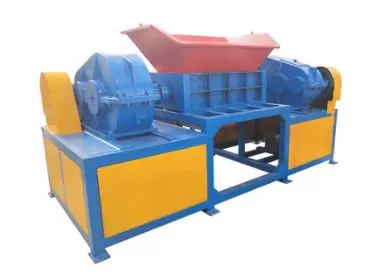
Low-cost advantages are fading. Southeast Asia is catching up. If we stay where we are, we fall behind. Two Shaft Shredder For Chemical Drum
Where Are the Current Bottlenecks?
I see three main bottlenecks in our industry:
1. Core component dependency
High-end gearboxes. Precision bearings. Control systems. Many still rely on imports. That limits scalability and increases costs.
2. Lack of standardization
Too many custom builds. Not enough modular design. This slows production and complicates maintenance.
3. Weak system integration
Selling a shredder is easy. Delivering a fully optimized recycling line is not. Many companies stop at the machine level.
These gaps are exactly where the next opportunity lies.
How Do We Upgrade Core Technology?
This is where I spend most of my time.
At Amige, we focus on fundamentals. Rotor design. Blade materials. Cooling systems. These are not glamorous topics. But they decide performance.
We invest in:
- High-efficiency cutting systems
- Wear-resistant materials
- Energy-saving motor configurations
For example, optimizing rotor geometry can improve throughput by 15–20%.
That’s not marketing. That’s engineering.
Technology upgrades don’t need to be flashy. They need to be effective.
Can Automation Drive the Next Leap?
Short answer: yes. Long answer: absolutely yes.
Automation is no longer optional. Labor costs demand it. Quality control requires it.
Smart recycling lines now include:
- PLC control systems
- Real-time monitoring
- Automated feeding and sorting
These reduce human error. Improve consistency. Increase output stability.
In one project, automation reduced labor by 30% while increasing output stability by 25%.
That’s the kind of upgrade customers are willing to pay for.
How Important Is Global Market Positioning?
Critical. Absolutely critical.
Domestic competition is intense. Margins are thin. The real growth comes from overseas markets.
Southeast Asia. Middle East. South America. These regions are investing heavily in recycling infrastructure.
But exporting machines is not enough.
We must:
- Meet international standards (CE, ISO)
- Provide after-sales support
- Adapt to local materials and conditions
Globalization is not about shipping products. It’s about delivering solutions.
What Role Does Product Reliability Play?
Let me be blunt.
If your machine fails, nothing else matters.
Reliability is the foundation of trust. And trust drives repeat business.
We focus on:
- Stable performance under continuous operation
- Easy maintenance design
- Long service life
A machine that runs 8,000 hours per year without major failure is worth more than a cheaper one that breaks every month.
Customers remember downtime more than price. Always.
Is Branding the Missing Piece?
Yes. And many underestimate it.
Taizhou companies are strong in manufacturing. Weak in branding.
We need to shift from OEM thinking to brand ownership.
That means:
- Clear product positioning
- Consistent quality
- Strong technical storytelling
A good brand reduces price sensitivity. It builds long-term relationships.
I’ve seen customers choose reliability over cost—when they trust the brand.
What Will the Future Look Like?
I see three clear trends:
- Integrated recycling systems
- Smart, data-driven machines
- Higher environmental standards
The companies that win will not be the cheapest. They will be the most reliable. The most efficient. The most adaptable.
Taizhou has the foundation.
Now we need the discipline to upgrade.
Conclusion
The leap is not about scale. It’s about capability. Taizhou machinery must upgrade technology, embrace automation, and build global brands. Under “Made in China 2025,” those who focus on reliability and system value will lead the next phase of the plastic recycling industry.