
I have walked into too many factories where the shredder is running, but the output tells a different story. Oversized chunks. Inconsistent flakes. Dust everywhere. The downstream line struggles. The pelletizer chokes. Operators blame the machine. But I know better. The issue often starts with one overlooked component—the screen. Ignore it, and your process becomes unstable. Misjudge it, and your cost goes up. Master it, and everything falls into place.
The screen size in a shredder defines the upper limit of particle size, but precision control depends on a coordinated system of screen selection, rotor dynamics, material behavior, and discharge efficiency. True control comes from engineering the whole process—not just choosing a hole diameter.
I run Amige. I care about results, not excuses. Let me show you how we approach this in real operations.
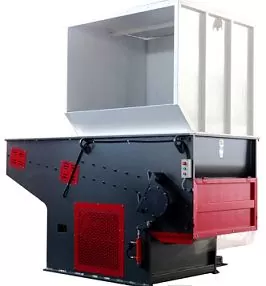
Why Does Screen Size Set the Output Limit?
The screen is a physical barrier. Simple rule. If material cannot pass through, it stays inside.
That means shredding continues until particles are small enough.
But here is the nuance. Not all particles behave the same.
Rigid plastics break cleanly. Soft plastics deform. Film stretches. Rubber compresses.
So even with a 20mm screen, output may range from 12mm to 25mm.
That is why experienced operators never rely on nominal size alone.
Is Smaller Screen Always Better?
I hear this question often. My answer is always the same—no.
Smaller screens increase resistance.
Resistance increases torque load.
Load increases energy consumption and heat.
From our performance benchmarking, reducing screen size from 30mm to 15mm can increase energy usage by 30%.
That is not efficiency. That is waste.
Also, throughput drops. Production slows down.
A good engineer balances size, capacity, and cost. Single Shaft Shredder Machine For HDPE Pipes
What Other Factors Influence Final Particle Size?
Screen size is only one piece of the system. I always look at the full picture.
Rotor Speed
Higher speed means more cuts.
More cuts mean smaller particles.
But too high? You generate fines. Dust increases.
Balance is everything.
Blade Configuration
Hook blades tear. Flat blades cut.
Different designs produce different shapes.
Shape affects how material passes through the screen.
Material Characteristics
HDPE behaves differently from PET.
Film behaves differently from rigid lumps.
We always test materials before finalizing configuration.
Feeding Method
Uniform feeding improves consistency.
Irregular feeding creates variation.
It is basic. But often ignored.
How Do We Precisely Control Particle Size?
Precision is not luck. It is process discipline.
Here is how we do it in our projects.
Step 1: Define Target Application
Is the output for washing?
Granulation?
Direct extrusion?
Each application has tolerance requirements.
We define that first.
Step 2: Select Screen Size Strategically
We do not aim exact. We aim slightly below target.
Then we adjust other variables.
Step 3: Optimize Rotor Parameters
Speed. Torque. Cutting frequency.
We tune these based on material.
No fixed formula. Only experience.
Step 4: Maintain Blade Sharpness
Dull blades ruin consistency.
We enforce strict maintenance schedules.
Step 5: Improve Discharge Efficiency
A good discharge system prevents over-shredding.
We often integrate forced air systems.
This stabilizes particle size.
What Are the Most Common Mistakes?
I see the same issues across markets.
Blindly Choosing Smaller Screens
Smaller is not better. Appropriate is better.
Ignoring Material Differences
One setup cannot handle all plastics.
Customization is necessary.
Poor Maintenance
Worn screens increase hole size.
Worn blades reduce cutting efficiency.
Consistency disappears.
Overloading the Machine
Too much input reduces control.
Stable feeding equals stable output.
Can We Improve Precision Beyond Screens?
Yes. And serious operations already do.
Secondary Screening
Adding a vibrating screen improves size classification.
Wet Shredding
Water reduces heat and friction.
Particle shape becomes more consistent.
Intelligent Monitoring
Sensors track load, temperature, and output quality.
We are integrating smart systems into our lines.
This is not the future. It is already happening.
What Is My Practical Advice?
I do not chase perfection in one step.
That mindset causes problems.
Instead, I build stable systems.
Right screen.
Proper speed.
Sharp blades.
Controlled feeding.
Efficient discharge.
Then we test. Adjust. Repeat.
That is how professionals work.
That is how we deliver value.
Conclusion
Screen size defines the limit, not the result. Precision comes from system optimization. Balance all variables. Test with discipline. Avoid assumptions. Consistency is engineered, not guessed.