
Policy windows do not stay open forever. I have seen many recycling companies hesitate, delay paperwork, or misunderstand requirements—only to miss out on substantial government subsidies. The problem is not lack of opportunity. It is lack of clarity. Equipment upgrades are capital-intensive. Margins are often tight. Without external support, expansion slows down. Yet many operators treat subsidy applications as secondary tasks. That is a costly mistake in today’s policy-driven market.
The reality is simple: governments are actively subsidizing equipment upgrades for plastic recycling enterprises, but only those with compliant technology, clear documentation, and aligned environmental metrics can qualify. If you understand policy direction, prepare technical data early, and structure your investment around energy efficiency and emissions reduction, subsidy approval becomes a manageable process—not a gamble.
I run a machinery business. I deal with this every week. Some clients come prepared. Others come late. The difference shows in their balance sheets.
Why are governments pushing equipment upgrades now?
This is not random. It is structural.
Globally, circular economy policies are tightening. Governments are no longer satisfied with basic recycling. They want efficiency. They want traceability. They want lower carbon output.
According to Global Circular Economy Policy Tracker, over 60% of new environmental regulations now include equipment modernization incentives.
Old machines consume more energy. They generate more dust. They produce inconsistent output.
From a regulator’s point of view, that is unacceptable.
From a business point of view, that is an opportunity.
What types of equipment are eligible for subsidies?
Not all machines qualify. That is the first filter.
In my experience, governments focus on three categories:
- Energy-efficient size reduction equipment
- Advanced washing and separation systems
- Intelligent sorting and automation systems
For example, high-efficiency shredders and crushers with optimized rotor design can reduce energy consumption by up to 20% (Energy Efficiency in Recycling Equipment Report).
Similarly, closed-loop washing lines with water recycling systems are often prioritized.
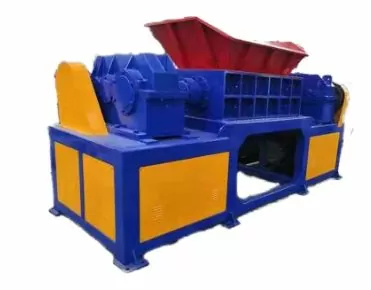
If your equipment cannot demonstrate measurable improvement, your application weakens. Two Shaft Shredder For Chemical Drum
What are the key eligibility criteria?
This is where many companies fail.
They assume buying new equipment is enough. It is not.
Eligibility usually includes:
- Registered recycling business license
- Environmental compliance records
- Proof of production capacity
- Equipment technical specifications
- Energy consumption benchmarks
Data from Recycling Compliance Study shows that nearly 35% of applications are rejected due to incomplete documentation.
I always tell my clients: treat this like a contract bid, not a casual form submission.
How do I align my equipment choice with policy direction?
This is where experience matters.
You do not buy a machine first and ask for subsidy later.
You reverse the logic.
Step one: study policy keywords
- “Low carbon”
- “Energy saving”
- “Smart manufacturing”
Step two: match equipment specifications to those keywords.
For example, variable frequency drives (VFD), automated feeding systems, and dust control modules are often highlighted in subsidy guidelines (Smart Manufacturing Incentive Guide).
When I design a line for a client, I already think about their subsidy application.
That is how you win twice.
What is the typical subsidy application process?
Let me simplify it.
Most regions follow a similar structure:
- Project proposal submission
- Technical evaluation
- On-site inspection
- Approval and public listing
- Fund disbursement
Sounds straightforward. It is not.
Timing matters.
According to Industrial Subsidy Timeline Report, approval cycles can range from 3 to 9 months.
Miss one deadline, and you wait another year.
That is why I push clients to prepare early.
What documents should I prepare in advance?
Documentation is your backbone.
I usually advise preparing:
- Equipment purchase contracts
- Technical datasheets
- Energy consumption reports
- Environmental impact assessments
- Financial statements
One overlooked detail: data consistency.
If your declared capacity does not match your equipment specs, reviewers will question everything.
According to Subsidy Audit Case Review, inconsistent data accounts for 22% of failed applications.
Details matter.
How can I increase my approval success rate?
There is no shortcut. But there is method.
From my perspective, successful applicants do three things well:
- They align early with policy direction
- They invest in compliant technology
- They present clean, verifiable data
Some even work with third-party consultants to refine their applications.
I prefer a more direct approach.
As a manufacturer, I provide clients with:
- Detailed technical documentation
- Energy-saving calculations
- Application support
This is not extra service. This is part of doing business properly.
What are the common pitfalls to avoid?
Let me be blunt.
Most failures are self-inflicted.
Common mistakes include:
- Applying after equipment installation without prior approval
- Choosing low-cost machines without efficiency data
- Ignoring environmental compliance requirements
- Submitting incomplete or inconsistent documents
According to Industrial Funding Failure Analysis, over 40% of rejected cases fall into these categories.
Avoid them. It is not complicated.
It just requires discipline.
Is it worth the effort?
I get this question often.
My answer is always the same.
If you are serious about scaling your recycling business, you cannot ignore policy leverage.
Subsidies can cover 10% to 30% of equipment investment in some regions (Recycling Investment Incentive Data).
That is not small change.
More importantly, compliant equipment improves your operational efficiency.
You save twice.
Conclusion
Government subsidies reward preparation, not luck. Align equipment with policy. Prepare documentation early. Treat the process seriously. Done right, subsidies reduce cost and strengthen your operation. Ignore them, and you fund the upgrade alone.