
Plastic recycling looks simple from a distance. Feed material in. Get reusable flakes out. But in reality, I’ve seen too many operations stall because of one wrong decision at the very beginning—the wrong size reduction equipment. The confusion between shredders and crushers is not just technical. It is costly. It leads to downtime, unstable output, and unnecessary wear. Many buyers assume they are interchangeable. They are not. And that assumption alone can quietly eat into your margins.
In short, shredders are designed for rough, primary size reduction of bulky or tough materials, while crushers are built for precise, secondary size reduction with consistent output size. If you choose the wrong one, you either waste energy or fail to meet downstream processing requirements. The right choice depends on your material type, input size, and final output expectations—not just price or capacity.
I have spent years helping clients correct this mistake. Some learned it the hard way. Others came early and saved themselves a lot of trouble. Let me break it down clearly.
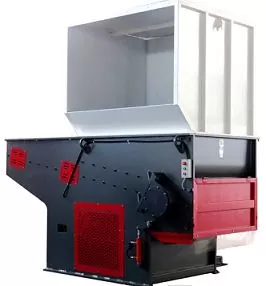
What exactly is a shredder?
A shredder is a workhorse. No finesse. Just torque.
In my factory, when we talk about shredders, we mean machines that can handle large, irregular, and often contaminated materials. Think plastic drums, pallets, thick pipes, or even post-consumer waste streams.
The core advantage is brute force.
According to industry data, shredders can reduce volume by up to 70% in the first stage. That is not about precision. That is about survival in harsh conditions.
A shredder typically features:
- Low speed
- High torque
- Thick blades
- Wide feeding chamber
It does not care about uniformity. It cares about breaking things down. Single Shaft Shredder Machine For LDPE Film
What exactly is a crusher?
Now, a crusher is a different personality altogether.
If the shredder is a hammer, the crusher is a scalpel.
Crushers are designed for controlled size reduction. You already have manageable input material. Now you need consistent output.
In most recycling lines I design, crushers come after shredders.
Data from Plastic Processing Efficiency Study shows that proper crushing can improve downstream washing efficiency by 25%.
Key features of crushers:
- High speed rotation
- Sharp knives
- Screen-controlled output size
- Clean, uniform flakes
This is where quality starts to matter. Heavy Duty Plastic Crusher For Car Bumper
Why do people confuse the two?
Because both “break plastic.”
That’s where the misunderstanding starts.
From a procurement perspective, buyers often focus on:
- Capacity (kg/h)
- Motor power
- Price
They ignore process logic.
I’ve seen clients buy a crusher to handle entire plastic drums. Result? Knife damage within days. Motor overload. Production halt.
Others use a shredder alone and expect uniform flakes. That never happens.
According to Waste Equipment Misapplication Survey, over 40% of recycling startups misuse size reduction equipment in the first year.
This is not a technology issue. It is a decision issue.
When should you choose a shredder?
I usually ask one question: “Can your material fit into your crusher comfortably?”
If the answer is no, you need a shredder.
Typical shredder applications:
- Large plastic containers
- Thick-walled pipes
- Film rolls and bundles
- Mixed waste streams
Shredders excel when:
- Material is bulky
- Shape is irregular
- Contamination is high
They are the first gatekeeper.
In operational terms, shredders reduce handling complexity and prepare material for precision processing.
When should you choose a crusher?
Once material is manageable, the crusher takes over.
Crushers are essential when:
- You need consistent particle size
- You are feeding washing lines
- You are preparing for pelletizing
In fact, pellet quality depends heavily on flake uniformity. That starts here.
Based on Recycling Line Optimization Guide, improper crushing can reduce pellet quality yield by up to 18%.
In my experience, this is where professionals separate from amateurs.
They understand that precision equals value.
Can one machine replace the other?
Short answer: No.
Long answer: Not efficiently.
There are hybrid solutions. Some machines claim to do both shredding and crushing. But in reality, they compromise on both ends.
I’ve tested many.
They either:
- Lack torque for heavy materials
- Or fail to produce uniform output
From a business standpoint, compromise means inefficiency.
And inefficiency means cost.
According to Equipment Lifecycle Cost Analysis, using the wrong machine can increase maintenance costs by 30% annually.
That is not a small number.
How do I decide correctly for my operation?
I follow a simple framework when advising clients.
Step 1: Define your input
- Size
- Shape
- Thickness
- Contamination level
Step 2: Define your output
- Required particle size
- Downstream process (washing, extrusion, etc.)
Step 3: Match the process flow
- Shredder → Crusher (most common)
- Crusher only (rare, for already small materials)
Step 4: Validate with real samples
No guesswork. No assumptions.
In manufacturing, tradition matters for a reason. Proven workflows exist because they work.
What mistakes should you avoid?
I have seen the same mistakes repeated across different markets.
Here are the most common ones:
- Buying based on price alone
- Ignoring material characteristics
- Skipping process design
- Expecting one machine to do everything
These mistakes are predictable. And preventable.
A proper consultation upfront costs far less than correcting a wrong installation later.
Conclusion
Shredders and crushers serve different roles. One prepares. One refines. Treat them as a system, not alternatives. Choose based on process logic, not assumption. That is how you protect both output quality and long-term profitability.